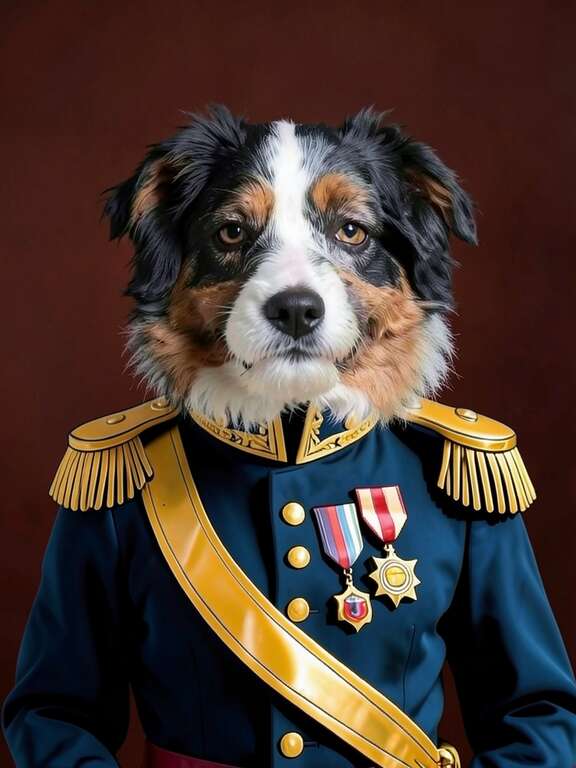
The short answer: About 4.1 million pets are adopted from U.S. shelters each year out of 6.3 million who enter. Rescue families celebrate the adoption anniversary as "Gotcha Day" — with special treats, new toys, before-and-after photos, custom portraits, and shelter donations. Best portrait styles for rescues: Renaissance royal (shelter to throne), superhero (overcoming), nature backdrop (freedom), regal military (resilience), and soft watercolor (transformation). Many rescue parents create before-and-after portrait pairs to tell the full story.
About 6.3 million pets enter U.S. shelters annually and 4.1 million are adopted each year. Rescue families celebrate their pet's adoption anniversary — called "Gotcha Day" — with special treats, new toys, portrait comparisons, and donations to shelters. Popular portrait styles for rescue pets include Renaissance royal, superhero, nature backdrops, and soft watercolors. Some owners create before-and-after portrait sets to tell their pet's full transformation story. Adopting from a shelter saves a life, opens space for another animal, and reduces demand for puppy mills.
- 4.1M shelter pets adopted yearly in the U.S.
- "Gotcha Day" = adoption anniversary celebration
- Renaissance, superhero, watercolor are top rescue portrait styles
- Adoption saves a life and opens space for another
She was found wandering a Walmart parking lot in Texas, ribs visible, tail between her legs. Three months later, she's sprawled on a velvet couch in Denver, snoring peacefully, dreaming of treats.
He spent two years in a shelter in Los Angeles, overlooked because he was "too old" at seven. Now he's the mayor of his block in Seattle, greeting every neighbor, living his best senior-dog life.
These are rescue stories. And they're happening every single day across America.
How Many Pets Are Adopted from Shelters Each Year?
Answer: Approximately 4.1 million pets are adopted from U.S. shelters each year, out of about 6.3 million that enter shelters annually. About 23 percent of dogs in American homes were adopted from shelters. The remaining shelter pets are reunited with owners, transferred to rescue partners, or unfortunately euthanized when space and resources run out. Every adoption directly saves a life and opens space for another animal in need.
Behind every statistic is a face. A personality. A story waiting to unfold in a loving home.
If you've adopted a rescue pet, you're part of something bigger. You didn't just get a pet — you gave a second chance.
What Do Real Rescue Stories Look Like?
Answer: Rescue stories take many forms — senior dogs surrendered when owners pass away, fearful cats from hoarding situations, trauma survivors from abuse and neglect, healthy pets simply waiting for the right family. Below are three real stories that capture the range, illustrating that every rescue pet has a unique transformation arc and that the right family makes all the difference.
🐕 Benny's Story — Chicago, IL
Benny was surrendered when his elderly owner passed away. At 9 years old, most people walked right past his kennel. The Martinez family didn't. "We wanted a calm dog who just needed love," says Maria. "Benny fit perfectly. He already knew all the commands. He just needed a home."
Today, Benny spends his days on the family's screened porch, supervising the neighborhood squirrels.
Senior Rescue🐱 Clementine's Story — Portland, OR
Found in a foreclosed home with six other cats, Clementine was terrified of people for months. Her foster mom, Aisha, spent weeks just sitting near her, reading aloud, never forcing contact. "One day, she just climbed into my lap. I cried."
Clementine (now Cleo) has been with Aisha for three years. She still doesn't love strangers, but she sleeps on Aisha's pillow every night.
Fearful to Flourishing🐕 Duke's Story — Atlanta, GA
Duke was a "bait dog" rescued from a fighting ring. Covered in scars, missing part of an ear, he had every reason to distrust humans. Instead, he wagged his tail at every person who approached his kennel.
"He taught me what forgiveness looks like," says his dad, James. Duke now works as a therapy dog, visiting hospitals and nursing homes.
Trauma SurvivorWhat Is Gotcha Day and How Do You Celebrate It?
Answer: Gotcha Day is the anniversary of when a rescue pet was adopted — a tradition many rescue families celebrate like a birthday. Popular celebrations include special treats (pupcakes are a favorite), a new toy, photo comparisons of adoption day vs now, custom portraits commemorating the journey, donations to the shelter where they were adopted, social media story sharing, and special adventures. Some families throw parties; others mark it quietly with extra cuddles. There's no wrong way to celebrate the day you found each other.
For rescue families, the adoption anniversary — often called "Gotcha Day" — is as important as a birthday. Maybe more.
It marks the day everything changed. The day they left the shelter. The day they became family.
- Special meal or treats (pupcake, anyone?)
- New toy or adventure outing
- Photo comparison: adoption day vs. now
- Create a portrait commemorating their journey
- Donate to the shelter where you found them
- Share their story on social media to inspire others
Some families go all out with parties. Others mark it quietly with extra cuddles. There's no wrong way to celebrate the day you found each other.
Why Are Rescue Pet Before-and-After Photos So Powerful?
Answer: Before-and-after photos are powerful because they make the transformation undeniable. The dull coat that's now shiny. The fearful eyes that now sparkle with mischief. The tucked tail that now wags so hard the whole body wiggles. They're visual proof of what consistent love and care can do, and they serve as both personal milestones for the family and as inspiration for other potential adopters scrolling social media.
Every rescue parent knows this moment: looking at a photo from the shelter and comparing it to now.
The dull coat that's now shiny. The fearful eyes that now sparkle with mischief. The tucked tail that now wags so hard their whole body wiggles.
It's visible proof of what love can do.
"I look at Penny's shelter photo sometimes and I can't even believe it's the same dog. She was so shut down. Now she literally smiles. Her whole face changes when she's happy."
What Portrait Styles Work Best for Rescue Pets?
Answer: The five best portrait styles for rescue pets are Renaissance royal (symbolizing the journey from shelter kennel to castle throne), superhero style (honoring what they've overcome), nature backdrops (symbolizing new freedom and life), regal military (honoring bravery and resilience), and soft watercolor (capturing gentle transformation). Many rescue parents create before-and-after portrait sets — a more somber "before" portrait paired with a celebratory "after" — to tell the pet's full story.
A rescue pet portrait carries extra meaning. It's not just art — it's a statement.
It says: This animal was once unwanted. Overlooked. Maybe even abandoned. And now they're royalty on my wall.
Ideas for Rescue Pet Portraits
- Renaissance royal: From shelter kennel to castle throne. See our Renaissance pet portrait guide for personality-matched costume styles.
- Superhero style: Because they've already overcome so much
- Nature backdrop: Symbolizing their new freedom and life
- Regal military: Honoring their bravery and resilience
- Soft watercolor: Gentle, hopeful, capturing their transformation
Some rescue parents create two portraits: one in a "before" style (maybe more somber or dramatic) and one celebrating their current happy life. The contrast tells their whole story. For more on choosing the right style for your specific pet, see our species-specific portrait guide.
Why Does Rescue Adoption Matter?
Answer: Rescue adoption matters for five reasons. (1) It directly saves a life. (2) It opens shelter space for another animal in need. (3) Adoption fees fund continued rescue operations. (4) It reduces demand for puppy mills and backyard breeders that prioritize profit over animal welfare. (5) Shelter animals are often calmer, already trained, and bond deeply because they understand they were chosen. And here's something rescue families discover: they'll tell you the pet rescued them.
When you adopt, you:
- Save a life: Directly, immediately, undeniably
- Open a space: For another animal to be rescued
- Support the cause: Adoption fees fund more rescues
- Break the cycle: Reducing demand for puppy mills and backyard breeders
- Get an amazing pet: Shelter animals are often calmer, already trained, and deeply grateful
And here's something rescue families discover: they'll tell you the pet rescued them.
Who Helped Make Your Rescue Possible?
Answer: Behind every successful rescue is a network of humans: shelter workers who provided daily care, foster families who gave the pet a soft landing, transporters who drove them to safety, vets who healed their bodies, donors who funded their care, and volunteers who walked, socialized, and loved them. Consider making a donation to the rescue organization on your pet's Gotcha Day — it's a beautiful way to pay it forward and ensure other animals get the same chance yours did.
Behind every successful rescue is a network of humans who made it possible:
- Shelter workers who cared for them daily
- Foster families who gave them a soft landing
- Transporters who drove them to safety
- Vets who healed their bodies
- Donors who funded their care
- Volunteers who walked them, socialized them, loved them
Consider making a donation to your rescue organization on your pet's Gotcha Day. It's a beautiful way to pay it forward.
Frequently Asked Questions About Rescue Pets
Is it harder to bond with an older rescue pet?
No — and many rescue families argue the opposite. Older rescue pets often bond more deeply because they understand they've been chosen. They tend to be calmer, already trained, less destructive, and grateful in ways puppies and kittens aren't. The senior dog adoption movement has gained tremendous momentum because adopters consistently report their older rescues form profound, immediate bonds. Senior pets are often passed over in shelters, making their adoptions especially impactful. See our senior pets guide for more.
How long does it take a rescue pet to adjust to a new home?
The 3-3-3 rule is widely used by rescue organizations: 3 days to decompress (overwhelmed, may hide or seem withdrawn), 3 weeks to settle into a routine and start showing personality, and 3 months to feel fully at home and bonded. Some pets adjust faster, especially those from foster homes. Others — particularly dogs from neglect or abuse situations — may take 6 months or longer. Patience, consistent routine, and unconditional acceptance are the keys to successful rescue pet transitions.
What's the best gift for a rescue pet parent?
Custom rescue pet portraits are consistently rated as one of the most meaningful gifts because they honor the pet's transformation story. Other thoughtful options include a donation to the shelter where the pet was adopted (in the family's name), a personalized photo book documenting the pet's first year in their new home, professional photo session credits, or a quality pet bed/toy specifically suited to their rescue pet's preferences. The common thread: gifts that acknowledge the rescue journey carry more weight than generic pet supplies.
Should I make a portrait from my pet's shelter photo?
Yes, and it's a powerful tribute. Some rescue parents create two-portrait sets: one based on the original shelter photo (often more somber or vulnerable) paired with a celebratory current portrait (Renaissance royal, superhero, or joyful watercolor). Together, they tell the full transformation story. AI portrait apps like PawFav can work with shelter photos despite often being lower quality, since the AI focuses on facial features rather than photo perfection.
Why should I adopt instead of buying a pet?
Adopting saves a life, opens shelter space for another animal, supports the rescue ecosystem (adoption fees fund continued operations), reduces demand for puppy mills and backyard breeders that prioritize profit over animal welfare, and provides a deeply rewarding relationship. Shelter animals are often calmer, already house-trained, and have known temperaments. Many adopters describe a unique gratitude in their rescue pet's behavior — like the animal knows they were chosen.
Can my rescue pet have anxiety from their past?
Yes, and it's common. Rescue pets often carry trauma responses from their previous lives — fear of certain sounds, distrust of specific people, food guarding, separation anxiety. With patience, consistent routines, and sometimes professional behavioral support, most of these issues improve significantly over months. Some rescue pets fully overcome their anxiety; others manage it for life. Both outcomes are normal, and either way, the pet thrives in a loving home far better than they did before.
Your Rescue Deserves This
They've been through enough. They've waited long enough. They've earned their spot on the couch, on the bed, and on your wall.
A portrait of your rescue pet is more than decoration. It's a declaration: You matter. You're home. You're loved.
And every time you look at it, you'll remember: you didn't just adopt a pet. You changed a life. And in doing so, you changed your own.
Celebrate Your Rescue's Second Chance
Create a portrait that honors their journey home.
Create Their Portrait