If you came here looking for the short version: choose a photo that captures their essence, try a soft style like watercolor or Renaissance, and create when you're ready — not before. There's no right timeline. The full guide below walks through it gently. Take your time.
Creating a memorial portrait for a pet who has passed can be a meaningful way to honor the bond you shared. There is no right timeline. Some people are ready immediately while others need months or years. Choose a photo that captures their personality in a happy moment with good lighting. Comforting memorial styles include soft watercolors, Renaissance regal, classic timeless, and peaceful nature backdrops. The portrait can be displayed in a dedicated memorial space, their favorite spot, your bedroom, or among family photos. Memorial portraits also make one of the most thoughtful pet loss gifts you can give someone who is grieving — though timing and a personal note matter.
- There's no right timeline — create when you're ready, not before
- Choose a happy, clear photo that captures their essence
- Comforting styles: watercolor, Renaissance, classic, peaceful nature
- Memorial portraits are among the most meaningful pet loss gifts
This is a hard article to write. And if you're here, you may be going through something hard too.
First: I'm sorry. Losing a pet is a real loss. It doesn't matter what anyone else thinks or says. The grief is valid, and the hole they left is real.
When you're ready (not before, but when), creating a memorial portrait can be a meaningful way to honor the life you shared. Not to move on. Not to replace. Just to remember, beautifully.
This guide is here whenever you need it.
When Should You Create a Pet Memorial Portrait?
There is no right time, only your time. Some people create one immediately as a way to process grief. Others need months or years. Whether it's been three days or three years, whenever you feel ready to transform grief into something beautiful is the right moment. If you're not ready yet, that's okay. This page will be here.
Some people want to create a memorial portrait immediately. The urge to do something can feel overwhelming in those first days.
Others need months. Years, even. The thought of looking at photos is too painful at first, and that's okay too.
🤍 A gentle reminder
There's no right time to create a memorial. There's only your time. Whether it's been three days or three years, whenever you feel ready to transform grief into something beautiful is the right moment.
If you're not ready, bookmark this page. Come back when you are. We'll be here.
Why Do Memorial Portraits Help with Grief?
Grief can feel shapeless and overwhelming. A memorial portrait gives it form. When you create a portrait, you're not trying to forget or replace — you're choosing how to remember. A portrait transforms a photograph into something else: it elevates, dignifies, and says this life mattered, this bond was real, this love remains. Many people find the act of creating one is itself part of the healing.
Grief can feel shapeless and overwhelming. A memorial portrait gives it form.
When you create a portrait, you're not trying to forget or replace. You're choosing how to remember. You're taking the love that has nowhere to go now and putting it somewhere it can live: on your wall, in your home, visible every day.
"I couldn't look at her photos for weeks. They just made me cry. But when I finally made the portrait, something shifted. It wasn't a photo of her being gone. It was art celebrating that she existed. That helped."
A portrait transforms a photograph into something else entirely. It elevates. It dignifies. It says: this life mattered. This bond was real. This love remains.
Which Photo Should I Use for a Pet Memorial Portrait?
Choose a photo that captures their essence and personality — especially the look in their eyes that was uniquely theirs. Look for a happy moment with a clear view of their face in natural light. Many people find it more healing to use a photo from when their pet was healthy and vibrant rather than from their last days, since the chosen photo becomes the version they see daily. Trust your instinct. The right photo will feel right.
This is often the hardest part. Scrolling through hundreds of photos, each one bringing memories flooding back.
Take your time. And consider these gentle guidelines:
📸 What to look for
- Their essence: Choose a photo that captures who they really were — their personality, their spirit, and the look in their eyes that was uniquely theirs
- A happy moment: Look for photos where they seem content, relaxed, or joyful
- Clear view of their face: The AI works best when it can see their features clearly
- Good lighting: Photos taken in natural light tend to produce the best results
You might find yourself gravitating toward a photo from their last days, and that's understandable. But consider also looking back to when they were healthy and vibrant. That might be the version you want to see every day.
Trust your instinct. The right photo will feel right.
What Are the Best Styles for a Pet Memorial Portrait?
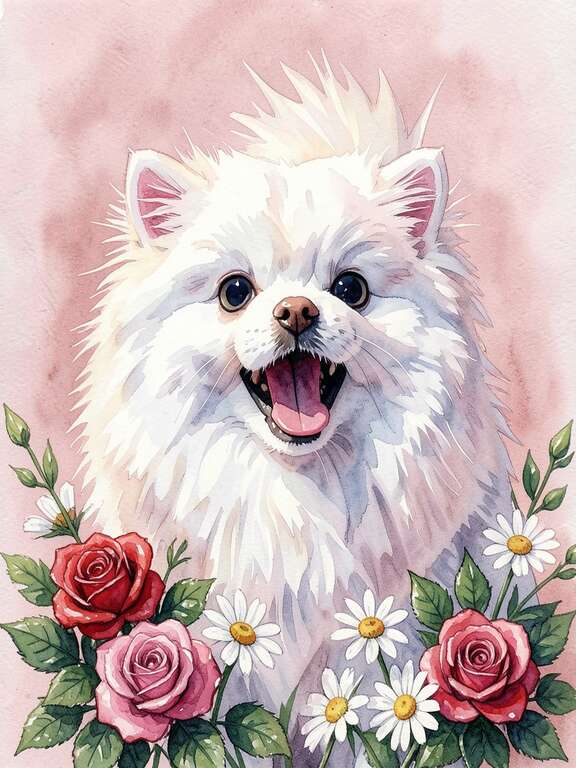
Four styles are most often chosen for memorials. Soft watercolor and painterly creates a dreamy, peaceful quality. Renaissance and regal honors them as nobility — surprisingly healing for many. Classic and timeless offers museum-quality dignity. Nature and peaceful places them in serene meadows or gardens with soft sunlight. There is no wrong choice — some people prefer playful styles to celebrate their pet's joyful spirit. Trust what feels right.
The style you choose sets the emotional tone of the portrait. For memorials, most people prefer styles that feel warm, dignified, or peaceful.
There's no wrong choice. Some people choose playful styles because that's how they want to remember their pet: full of life and joy. Others prefer something more solemn. Both are valid.
How Do I Create a Pet Memorial Portrait? (5 Gentle Steps)
Five gentle steps. (1) Choose a quiet moment when you won't be rushed. (2) Select a photo that captures them — the one that makes you smile through the tears. (3) Try different styles in PawFav until something feels right. (4) Save it and sit with it for a day before printing. (5) Print when ready, in whatever format suits where it will live in your home. There is no rush at any step.
When you're ready, here's how to approach it:
Choose your moment
Find a quiet time when you won't be rushed. Maybe with a cup of tea, or with their favorite blanket nearby. There's no need to hurry.
Select your photo
Pick the one that makes you smile through the tears. The one that truly captures them.
Try different styles
You don't have to commit right away. Explore options until something feels right.
Sit with it
Once you've created something you like, save it. Look at it the next day. See how it feels with fresh eyes.
Print when ready
There's no rush to print. But when the time comes, choose a format that feels right for where it will live in your home.
Where Should I Display a Pet Memorial Portrait?
This is deeply personal. Common meaningful locations include a dedicated memorial space (a small shelf with their portrait, collar, and a candle), their favorite spot (the window they loved or the couch they curled up on), your bedroom where you'll see them first thing, among family photos because they were family, or your office where their presence brings comfort. Some people aren't ready to display it prominently at first and keep it tucked away — the portrait will wait.
This is deeply personal. Here are some options to consider:
- A dedicated memorial space: A small shelf or corner with their portrait, perhaps alongside their collar, a candle, or a small plant
- Their favorite spot: Near the window they loved, or by the couch where they always curled up
- Your bedroom: Where you can see them first thing in the morning or before you fall asleep
- Among family photos: Because they were family
- Your office: Where their presence might bring comfort during hard days
Some people aren't ready to display it prominently at first. They keep it in a drawer and take it out occasionally, and that's okay too. The portrait will wait.
What Are the Best Pet Loss Gifts for Someone Grieving?
The most meaningful pet loss gifts are specific to the pet that was loved, not generic. Top options: a memorial portrait, a paw print pendant or locket, a custom plush toy with a memory pouch (Cuddle Clones), a memorial ornament, or a donation to an animal rescue in their pet's name. Timing matters — avoid the first days of acute grief; a few weeks to months later is often better. Always include a note that names the pet specifically.
If someone you love has lost a pet, finding the right pet loss gifts can feel difficult. You want to honor what they're going through without overwhelming them. A memorial portrait is one of the most meaningful pet loss gifts you can offer, because it says something that flowers and cards can't quite capture.
💝 Choosing and giving pet loss gifts with care
- Give it time: Avoid giving pet loss gifts in the first days of acute grief, when the pain is still raw and everything feels too much
- A few weeks to months later is often better, once the initial shock has softened into something the person can hold
- Include a note: Something simple that acknowledges their loss and the pet's importance in their life
- Give them space to feel: They may not react right away. Grief is complicated, and sometimes the most meaningful pet loss gifts need time to land
- Consider the anniversary: One month, one year, or the date of their pet's adoption can all be meaningful times to give a memorial portrait
The best pet loss gifts carry a simple message: I remember them too. I know they mattered. You're not alone in missing them.
What Should I Write in a Pet Memorial Note?
For a memorial portrait you create for yourself, reflect on a few prompts: what did they teach you, what was your favorite ordinary moment together, what do you want to remember most, what would you say to them now. For a sympathy card to someone else, name the pet specifically, acknowledge that the loss is real, and avoid phrases like "they're in a better place." Saying "I'm so sorry — I know how much [pet's name] meant to you" is enough.
If you're creating a portrait for yourself, consider writing something to accompany it. This isn't for anyone else. It's just for you.
What did they teach you?
What was your favorite ordinary moment together?
What do you want to remember most?
What would you say to them if you could?
You don't have to share these words with anyone. But writing them can be part of the healing. And keeping them with the portrait, tucked behind the frame, can make it even more meaningful.
More Questions People Often Ask
Is it normal to grieve deeply for a pet?
Yes. Pet loss is one of the most common — and most underestimated — forms of grief. The bond between people and their pets is real and profound, and the grief that follows their loss is real and profound too. What you're feeling, whether sadness, anger, guilt, numbness, or all of these, is normal and healthy. It's the price of having loved deeply.
Can I create a memorial portrait if I only have low-quality photos?
Yes. AI portrait apps work with smartphone photos, older photos, or photos that aren't perfectly lit, as long as the pet's face is reasonably visible. The artistic style helps fill in what the photo lacks. If you only have a few photos, choose the one that feels most like them.
What if I have multiple pets who have passed?
You can create individual portraits for each pet over time, or commission a single composite portrait if you have a photo of them together. Many people build a small memorial gallery wall over the years, adding each beloved companion as time passes. There's no need to do it all at once.
Should I make a memorial portrait if my pet is still alive but elderly?
Yes — many pet parents create portraits during their pet's senior years specifically to capture them while they're still here. It becomes a celebration of the time you have, and the portrait remains long after they've gone. There's no need to wait for grief to honor the bond.
Where can I find pet loss support?
Several organizations offer free pet loss support, including the ASPCA Pet Loss Hotline, the Pet Loss Support Hotline at Cornell University College of Veterinary Medicine, and online communities like the Association for Pet Loss and Bereavement. Many cities also have in-person grief groups. You don't have to grieve alone.
The Portraits We Carry
The truth is, you already carry a portrait of them inside you. Every memory is a brushstroke. Every moment you shared added color and shape to the image of who they were.
A physical portrait is simply an external version of what you already hold.
It can't bring them back. Nothing can. But it can give you something to look at on the hard days. Something that says: they were here. They were loved. They were real.
And maybe, over time, looking at their portrait won't just bring tears. Maybe it will bring a smile. A memory of a funny moment. The feeling of fur under your hand. The sound of their greeting when you came home.
That's what we hope for you. Not that the grief disappears, but that it softens. That the portrait becomes not a reminder of loss, but a celebration of what was.
You're Not Alone
Pet loss is one of the most common, and most underestimated, forms of grief. If you're struggling, know that what you're feeling is normal. It's healthy. It's the price of having loved deeply.
And whenever you're ready, whether that's today, next month, or next year, we're here to help you create something beautiful in their memory.
Because they deserved it. And so do you.
When You're Ready
Create a memorial portrait that honors the bond you shared. Take all the time you need.
Try PawFav Free