The short answer: The ten best ways to display pet portraits are gallery walls (3-7 portraits, mixed styles), statement pieces (24x36+ inches above sofas/fireplaces), entryways, home offices, bedrooms, kitchens, stairways, bathrooms, floating shelves, and rotating digital frames. Standard hanging height is 57-60 inches from floor to center. Above furniture, leave 6-12 inches between the bottom of the portrait and the top of the sofa, headboard, or mantel. The best spot is wherever you'll see and enjoy it daily.
Once you've created the perfect portrait of your pet, the next question is where to hang it. This guide covers ten creative ways to display pet portraits at home — from classic gallery walls and dramatic statement pieces to unexpected spots like bathroom powder rooms and stairway progressions. Each idea includes recommended sizes, hanging heights, and which artistic styles work best in that location. By the end, you'll know exactly where your PawFav portrait belongs.
- Standard hanging height: 57-60 inches from floor to center
- Above furniture: leave 6-12 inches of breathing room
- Statement pieces: 24x36 inches or larger; fill 60-75% of wall width
- Gallery walls: 3-7 portraits, 2-3 inch spacing between frames
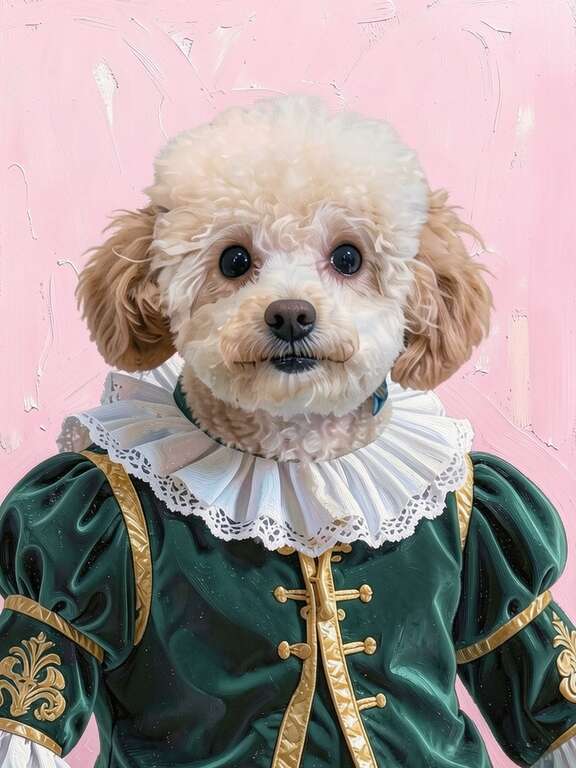
You've created the perfect portrait of your pet. Maybe it's a regal Renaissance-style painting. Maybe it's a playful pop art piece. Maybe it's a soft watercolor that captures their gentle soul.
Now what?
The portrait deserves more than sitting in your camera roll. It deserves a place in your home where you'll see it every day — and where guests will inevitably say, "Wait, is that your dog as a Victorian aristocrat?"
Here are ten creative ways to display your pet portraits, from classic approaches to ideas you probably haven't considered. Each one comes with sizing guidance and the styles that work best in that location.
1. How Do You Create a Pet Portrait Gallery Wall?
Answer: Five steps. (1) Choose 3-7 portraits — multiple styles of one pet, or one consistent style across multiple pets. (2) Lay them out on the floor first to plan the arrangement. (3) Mix sizes: one 16x20 anchor surrounded by 8x10 and 11x14 supporting pieces. (4) Maintain 2-3 inch spacing between frames. (5) Hang the largest piece first at 57-60 inches center, then build around it. The whole arrangement should fill 60-75% of the wall width above your furniture.
There's a reason gallery walls are everywhere: they work.
Group multiple portraits of the same pet in different styles — Renaissance, minimalist, watercolor, pop art. The variety creates visual interest while the consistent subject ties everything together. If you have multiple pets, give each their own portrait in the same style. Instant family gallery.
Use matching frames for a polished look, or mix frame styles for an eclectic vibe. Both work beautifully. The key is consistency in one dimension — either matching frames OR matching matting OR matching color palette. Vary too many things at once and the wall reads as cluttered.
2. What Size Should a Pet Portrait Be for a Statement Piece?
Answer: Go large — 24x36 inches or bigger. Above a standard 84-inch sofa, a 24x36 or 30x40 portrait works beautifully. Above a fireplace mantel, 30x40 to 36x48 inches commands the room. The 60-75% rule: your portrait should fill about 60-75% of the available wall width above the furniture. Dramatic styles like Renaissance, oil painting, and Baroque scale especially well. When in doubt, size up.
Sometimes one large portrait says more than a dozen small ones.
Choose your favorite image, print it big (think 24x36 inches or larger), and give it a wall to itself. Above a sofa. Over a fireplace. At the end of a hallway where it commands attention.
This works especially well for dramatic styles — your cat as a Renaissance noble, your dog in a Baroque gilded frame aesthetic. Go bold.
3. Should I Hang a Pet Portrait in My Entryway?
Answer: Yes — entryways are one of the highest-impact placements. Hang at eye level (57-60 inches from floor to center) so guests meet the portrait as they walk in. Choose a portrait whose style matches your home's overall vibe — Renaissance for traditional homes, minimalist for modern, pop art for playful. An 11x14 or 16x20 framed print works in most entryways; go larger if you have a wide foyer wall.
First impressions matter. Why not make yours memorable?
Hang a pet portrait in your entryway or foyer. It's the first thing guests see when they walk in, and it immediately signals that this is a home where pets are family.
Bonus: your actual pet will probably greet guests at the door too. The portrait-to-reality comparison never gets old.
4. Where Should I Put a Pet Portrait in My Home Office?
Answer: Two strategic spots. (1) Behind your monitor, in your sightline as you work — a mood lifter during long sessions. (2) On the wall behind you, framed within your video call camera view — a guaranteed conversation starter on Zoom. Pop art and Renaissance styles photograph particularly well on camera because of their bold colors and clear shapes. Size around 11x14 or 16x20 reads well on video without dominating the frame.
Working from home? Your pet portrait belongs in your workspace.
Position it where you'll see it during long work sessions — behind your monitor, on the wall you face during video calls, or on a shelf beside your desk. It's a mood lifter during tough afternoons.
Colleagues will absolutely comment on the distinguished portrait of Sir Barksalot behind you. Conversation starter guaranteed. Pro tip: position the portrait slightly off-center in the camera frame — dead center looks staged, off-center looks naturally curated.
5. What Pet Portrait Style Works Best in a Bedroom?
Answer: Calming styles work best in bedrooms — soft watercolors, minimalist line art, pencil sketches, and muted color palettes. Avoid high-energy pop art or dramatic Renaissance pieces that can feel busy in a sleep space. Hang the portrait 6-10 inches above the headboard, sized to roughly two-thirds the width of the bed (a 16x20 to 24x30 portrait above a queen, 24x36+ above a king).
Your bedroom is your retreat. Fill it with what you love.
A calming portrait style works beautifully here — soft watercolors, gentle minimalist line art, or muted color palettes. Position it where you'll see it first thing in the morning or last thing before sleep.
Some people find this comforting; others find it slightly unnerving to have their cat Whiskers watching them sleep. Know yourself.
6. Can I Display Pet Portraits in the Kitchen?
Answer: Yes — but choose the spot carefully. Avoid direct exposure to stove splatter and steam. Best kitchen placements are open shelving, breakfast nooks, leaned against backsplashes (not behind the stove), or on a wall that faces the kitchen rather than within the cooking zone. Playful styles work great here: pop art, cartoon illustrations, or portraits with food-themed accessories. Keep sizes small — 5x7 to 11x14 is right for kitchen scale.
The kitchen is the heart of the home — and probably where your pet spends considerable time hoping for dropped food.
A small portrait on open shelving, leaned against the backsplash, or hung in a breakfast nook adds personality to functional spaces. Playful styles work great here: pop art, cartoon illustrations, or portraits with funny accessories.
7. How Do I Display Pet Portraits Along a Stairway?
Answer: Follow the slope of the stairs. Hang each portrait at 57-60 inches above the step directly below it, so the line of portraits runs parallel to the staircase. Space portraits 4-6 inches apart vertically. Two arrangement options: chronological (oldest portrait at the bottom, newest at top, watching your pet's life unfold as you climb) or stylistic (one consistent style with the same pet in different poses or settings).
If you have stairs, you have a natural gallery space.
Line the stairway wall with portraits — either multiple images of one pet or one portrait of each pet in your household. Walking up or down becomes a mini journey through your pet portrait collection.
If you've been creating portraits over time, arrange them by date. Watch your photography (and your pet) evolve with each step. This is especially poignant for memorial galleries that span a pet's full life.
8. Can You Hang a Pet Portrait in a Bathroom?
Answer: Yes, with two precautions. (1) Choose a powder room or guest bathroom over a primary bathroom — less humidity, less direct shower exposure. (2) Use humidity-resistant frames with acrylic glazing rather than glass, plus sealed wood or metal frames. Avoid hanging directly across from or beside the shower. Humorous styles work best here — your pet in ridiculous costumes, exaggerated expressions, or absurd scenarios. Keep sizes to 8x10 or 11x14.
Hear me out.
A small, framed portrait in a powder room or guest bathroom is unexpected, delightful, and gives visitors something to smile about. It works best with humorous styles — your pet in ridiculous costumes, exaggerated expressions, or absurd scenarios.
Just make sure the frame and print can handle bathroom humidity. Acrylic glazing is your friend here.
9. How Do I Display Pet Portraits Without Putting Holes in the Wall?
Answer: Three damage-free options. (1) Floating shelves — lean framed portraits casually instead of hanging them, allowing easy rearrangement. (2) Picture ledges — long narrow shelves designed for art display, holding multiple portraits in a row. (3) Command strips — work for frames up to 16 pounds when applied to clean, smooth walls. All three are renter-friendly and let you move portraits without commitment. Layered sizes (large in back, medium in front, tiny tucked between books) creates the most visually interesting lean display.
Not everything needs to be hung.
Print your portrait, frame it, and lean it on a floating shelf alongside books, plants, and other objects you love. This creates a casual, curated look that's easy to update and rearrange.
Multiple sizes work well together. A large portrait leaned in back, a medium one in front, maybe a tiny one tucked among the books.
10. What's the Best Digital Frame for Pet Portraits?
Answer: Three top choices in 2026. Aura Frames ($150-$250) — best display quality and seamless app uploads. Nixplay ($100-$200) — best value with cloud storage. Skylight ($160-$200) — simplest interface for less tech-savvy gift recipients. All three accept JPEG uploads from PawFav and rotate hundreds of portraits automatically. Choose 9-10 inch displays for desks and 13-15 inch for shelves or wall mounting.
Can't choose just one portrait? Don't.
Digital frames have come a long way. Load yours with dozens of pet portraits in different styles and let them rotate throughout the day. It's like having a pet portrait gallery that changes with your mood.
This is perfect for PawFav power users who create new portraits regularly — you'll never run out of fresh content.
What's the Right Size and Hanging Height for Each Spot?
Answer: Size matches placement. 5x7 or 8x10 for desks and floating shelves. 8x10 or 11x14 for entryways, bathrooms, and kitchens. 16x20 for above a console table or as a gallery wall anchor. 24x30 or 30x40 for above a sofa or queen bed. 30x40 to 36x48+ for fireplaces and king beds. Hanging height is 57-60 inches floor to center, with 6-12 inches above furniture for the bottom edge.
| Placement | Recommended Size | Hanging Height |
|---|---|---|
| Desk or floating shelf | 5x7 to 8x10 | Lean or eye level when seated |
| Entryway | 11x14 to 16x20 | 57-60 inches center |
| Bathroom (powder room) | 8x10 to 11x14 | 57-60 inches center |
| Kitchen breakfast nook | 8x10 to 11x14 | Lean or 57-60 inches |
| Above a console table | 16x20 to 20x24 | 4-8 inches above the table |
| Above a queen bed | 20x24 to 24x30 | 6-10 inches above headboard |
| Above a king bed | 24x36 to 30x40 | 6-10 inches above headboard |
| Above a standard sofa | 24x36 to 30x40 | 6-12 inches above sofa back |
| Above a fireplace mantel | 30x40 to 36x48 | 4-8 inches above mantel |
| Stairway gallery | 11x14 mixed with 8x10 | 57-60 inches above each step |
What Other Ways Can I Display Pet Portraits?
Answer: Beyond traditional wall hanging, pet portraits work as desk accessories (small frames, acrylic blocks, photo cubes), seasonal decor rotations (swap portraits to match holidays), gifts for family members who love your pet, and custom merchandise (mugs, pillows, tote bags, phone cases). With PawFav you own the high-resolution file, so the same portrait can move from canvas to t-shirt to phone case without re-licensing.
Quick hits for those who want to go further:
Where Should I Actually Hang My Pet Portrait?
Answer: The best location is wherever you'll see and enjoy it daily. Don't overthink the "perfect" spot. Start somewhere obvious — above your sofa, in your home office, beside your bed. Live with it for a week. Move it if it doesn't feel right. The goal isn't interior design perfection; it's surrounding yourself with images that make you smile every time you walk past.
Here's the real secret: the best place for your pet portrait is wherever you'll actually enjoy it daily.
Don't overthink the "perfect" location. Start somewhere. Live with it for a week. Move it if it doesn't feel right.
The goal isn't interior design perfection — it's surrounding yourself with images that make you happy. And what makes people happier than seeing their beloved pet immortalized in art?
Frequently Asked Questions About Displaying Pet Portraits
Should I use canvas or framed prints for pet portraits?
It depends on style and location. Canvas works best for oil painting, Renaissance, abstract, and pop art styles — the texture adds warmth and gallery-wrapped edges look finished without a frame. Framed prints with a white mat work best for watercolor, minimalist, and pencil sketch styles. For bathrooms or kitchens, framed with acrylic glazing protects against humidity and grease.
How many pet portraits should be on a gallery wall?
3-7 portraits is the sweet spot. Three creates a clean trio (great above a console), five offers more rhythm (works above a sofa or in a hallway), seven fills a larger wall comfortably. Going beyond seven risks looking cluttered unless the wall is genuinely large. Mix sizes within the grouping — one anchor plus supporting pieces.
Where should I hang my pet portrait if I have multiple pets?
Three approaches. (1) Give each pet their own portrait in the same style and arrange as a coordinated set. (2) Combine all pets into a single composition. (3) Spread the pets across rooms — each gets a dedicated wall in a meaningful space. The coordinated set photographs best for social media and works especially well in stairways or hallways.
How do I keep pet portraits from fading in sunlight?
Three protective steps. (1) Choose UV-resistant inks when ordering canvas or prints — most reputable services offer this. (2) Use UV-filtering acrylic glazing instead of standard glass for framed prints. (3) Avoid hanging in direct sunlight (south-facing windows are the worst). If your favorite spot gets direct light, rotate the portrait every few months or invest in museum-grade conservation glass.
What's the best lighting for displaying a pet portrait?
Soft, indirect light works best. Picture lights mounted above the frame add gallery polish. Track lighting angled at 30 degrees from the wall reduces glare. Avoid direct overhead lighting that creates harsh shadows. For canvas prints, matte finishes handle ambient light better than glossy. Warm white bulbs (2700-3000K) flatter most artistic styles; cooler bulbs work for minimalist or modern pieces.
Can I rearrange my pet portrait display seasonally?
Absolutely — and many pet parents do. Rotate Halloween portraits in October, holiday-themed pieces in December, and floral or beach-themed styles in summer. PawFav makes seasonal rotation affordable since you can create new themed portraits anytime. Use picture ledges or floating shelves for the easiest seasonal swaps without re-drilling holes.
Ready to Create?
If you're reading this with empty walls and a camera roll full of pet photos, you know what to do.
Create the portrait first. The perfect spot will reveal itself.
Transform Your Pet Photos Into Wall Art
Create gallery-worthy portraits in minutes. Free trial credits included.
Try PawFav Free