The short answer: The history of pet portraits spans 5,000 years across six eras. Ancient Egyptians painted sacred cats in tombs (3000 BCE). Renaissance masters like Titian and Gainsborough painted nobility's dogs (1400-1700). Queen Victoria democratized the tradition for the middle class (1837-1901). Photography opened it further. Andy Warhol made pet art cool through pop art (1960s). Today, AI apps like PawFav represent the most democratic chapter yet — anyone with a smartphone can create gallery-quality pet portraits. The technology has changed beyond imagination. The impulse hasn't changed at all.
When you hang a custom portrait of your dog on the wall, you're participating in a tradition that stretches back 5,000 years. From sacred cats in ancient Egyptian tombs to hunting dogs in Renaissance oil paintings, from Queen Victoria's beloved dogs to Warhol's pop art cats to today's AI-generated portraits — humans have always found ways to immortalize the animals they love. This article traces the history of pet portraiture through six major eras, names the famous artists and patrons who shaped it, connects each historical period to the modern portrait styles we use today, and explains why the current AI revolution isn't a break from tradition but its most democratic chapter yet.
- Oldest pet portraits: ancient Egyptian cats, ~3000 BCE
- Renaissance: birth of the regal pet portrait tradition
- Victorian era: pet portraits become accessible to the middle class
- Warhol's pop art made pet art culturally significant
- 2020s AI: the most democratic chapter in 5,000 years
Somewhere around 3,000 years ago, an Egyptian craftsman carefully painted a cat on the wall of a nobleman's tomb. The cat wasn't generic. It was a specific cat, depicted with individual markings and a particular posture, placed there so the nobleman could be with his beloved companion in the afterlife.
Three thousand years later, you're uploading a photo of your golden retriever to an app on your phone and turning it into a Renaissance-style oil painting you'll pick up at Walgreens this afternoon.
The technology has changed beyond imagination. The impulse hasn't changed at all.
What's the Complete Timeline of Pet Portrait History?
Answer: Pet portrait history spans six major eras over 5,000 years. Each era expanded who got to participate in the tradition — from pharaohs and nobles to middle-class Victorians to anyone with a smartphone today.
| Era | Dates | Who Made Them |
|---|---|---|
| Ancient World | 3000 BCE – 500 CE | Tomb painters, mosaic artists |
| Renaissance | 1400 – 1700 | Court painters: Titian, Velazquez, Gainsborough |
| Victorian Era | 1837 – 1901 | Sir Edwin Landseer, professional portraitists |
| Early Photography | 1840s – 1900s | Studio photographers |
| Pop Art & Modern | 1900 – 2000 | Warhol, Lichtenstein, independent artists |
| AI Revolution | 2020 – present | Anyone with a smartphone |
When Did the First Pet Portraits Appear?
Answer: The first pet portraits appeared in ancient Egypt around 3000 BCE, where sacred cats were depicted in tomb paintings, sculptures, and jewelry — often with individual markings suggesting specific beloved animals. Greek and Roman art followed with hunting and guard dogs. The famous Pompeii "Cave Canem" mosaic (~79 CE) depicts a specific dog with detailed individual features, predating Renaissance court portraiture by 1,500 years.
Egypt, Greece & Rome
3000 BCE – 500 CEIn ancient Egypt, cats were considered sacred, associated with the goddess Bastet. They appeared in tomb paintings, sculptures, and jewelry — often depicted with individual characteristics that suggest specific, beloved animals rather than generic representations. When a family cat died, the household shaved their eyebrows in mourning. Cats were mummified and buried with their owners.
Greek and Roman art included dogs prominently, particularly hunting dogs and guard dogs. The famous mosaic at Pompeii reading "Cave Canem" (Beware of Dog) features a detailed, individualized portrait of a specific dog, proving the impulse to depict your particular pet existed two millennia before Instagram.
Why Did Renaissance Masters Paint So Many Pets?
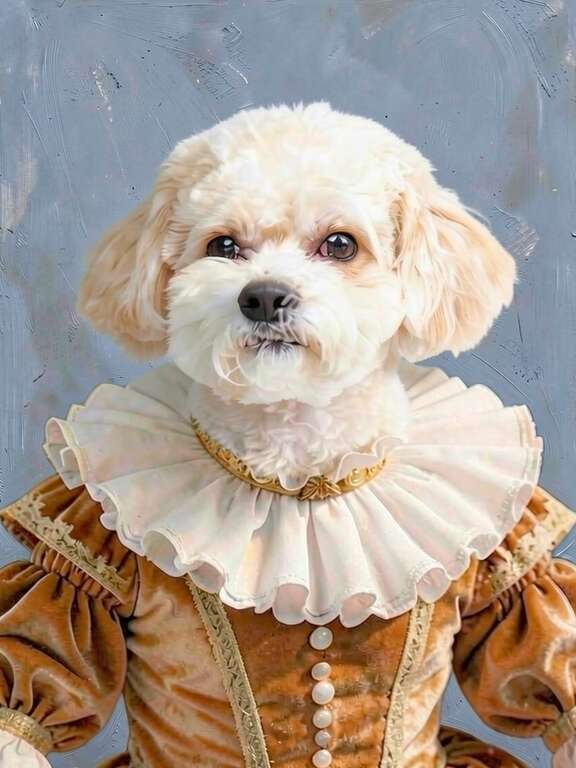
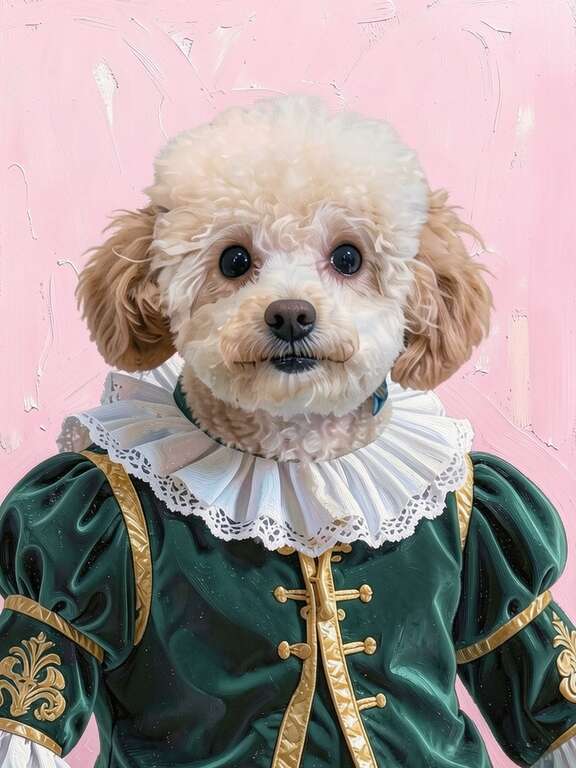
Answer: European nobles in the Renaissance (1400-1700) commissioned master painters like Titian, Velazquez, and Gainsborough to include their dogs in family portraits and hunting scenes. Dogs weren't accessories — they were symbols of loyalty, wealth, and status. A nobleman's hunting hound at his feet signaled social standing. A lapdog in a noblewoman's arms indicated refinement. This is the era that birthed today's "pet in royal costume" tradition.
The Golden Age of Pet Portraiture
1400 – 1700The Renaissance is where pet portraiture as we know it truly began. European nobles commissioned master painters to include their dogs in family portraits, hunting scenes, and even religious works. Titian, Velazquez, Gainsborough, and many others painted dogs with the same care and attention they gave to their human subjects.
Dogs in Renaissance paintings weren't accessories. They were symbols: of loyalty, of wealth, of status. A nobleman's hunting hound at his feet signaled his social standing. A lapdog in a noblewoman's arms indicated her refinement. The dogs were painted from life, with individual markings, expressions, and postures that art historians can trace to specific breeds and even specific animals.
This is the era that gave birth to the "pet in royal costume" tradition that has become the most popular custom pet portrait style in 2026. When you create a Renaissance pet portrait of your dog dressed as a military general, you're directly referencing a 500-year-old artistic convention. The humor works because the tradition is real.
Why Did Queen Victoria Make Pet Portraits Popular?
Answer: Queen Victoria (reigned 1837-1901) was an obsessive animal lover who kept dozens of dogs and commissioned portraits of many — most famously from Sir Edwin Landseer. Her public devotion to her pets made pet ownership fashionable across all classes of Victorian society. For the first time in history, pet portraiture wasn't just for the nobility — middle-class families began commissioning portraits of their dogs, cats, and birds. The Victorian era also invented modern pet memorial culture.
The Democratization of Pet Love
1837 – 1901Queen Victoria was an obsessive animal lover who kept dozens of dogs throughout her life and commissioned portraits of many of them. Her public devotion to her pets made pet ownership fashionable across all classes of Victorian society. For the first time, pet portraiture wasn't just for the nobility. Middle-class families began commissioning portraits of their dogs, cats, and even birds.
The Victorian era also saw the rise of pet memorial culture. Elaborate mourning rituals for deceased pets, including commissioned memorial portraits, became common. The Victorians invented the sentimental pet portrait — the kind that captures the gentle, loving relationship between human and animal rather than the animal's utility as a hunter or guardian.
Sir Edwin Landseer became Victoria's favored animal painter and is sometimes called the founding father of modern pet portraiture. His painting "The Old Shepherd's Chief Mourner" (1837), depicting a dog grieving at his owner's coffin, remains one of the most influential pet paintings ever created.
How Did Photography Change Pet Portraits?
Answer: Photography emerged in the Victorian era (1840s) and transformed pet portraiture by making it instantly accessible to anyone who could afford a studio sitting. Pet photographers developed clever techniques to keep animals still during long exposure times — including hidden assistants holding pets in place and treats positioned just above the camera lens, a technique pet photographers still use today. By the early 1900s, family pet photos became a normal part of household life.
The Studio Revolution
1840s – 1900sPhotography emerged during the Victorian period, making pet portraits suddenly accessible to anyone who could afford a studio sitting. Early pet photographers developed techniques for keeping animals still during the long exposure times required, including hidden assistants holding pets in place and treats positioned just above the camera lens — a technique pet photographers still use today.
By the late 1800s, dedicated pet photography studios had opened in major cities. Families brought their cats, dogs, and even pet birds for formal portrait sessions. The high cost of early photography meant pet photos remained somewhat aspirational, but by the 1900s with the rise of affordable home cameras (Kodak's Brownie, 1900), pet imagery became truly ubiquitous.
How Did Andy Warhol Change Pet Art?
Answer: Andy Warhol (1928-1987) was famously devoted to his cats — most named Sam (he had many) plus one named Hester — and created pop art prints featuring them in his signature bold, graphic style. His work proved pet art could be simultaneously personal and culturally significant, sentimental and avant-garde. Every pop art pet portrait created today traces back to his 1960s and 70s work. Warhol made pet art cool when it had been considered sentimental kitsch.
Pets as Pop Culture
1900 – 2000The 20th century brought two revolutions to pet portraiture. First, photography made pet images ubiquitous. Every family had a shoebox of pet photos. The specialized pet portrait, once a luxury, became a standard part of pet ownership.
Second, the pop art movement brought pets into the fine art conversation in a completely new way. Andy Warhol was famously devoted to his cats (all named Sam except one named Hester) and created prints of them using his signature bold, graphic style. His work proved that pet art could be simultaneously personal and culturally significant, sentimental and avant-garde.
The late 20th century also saw the rise of the custom pet portrait industry as we know it: independent artists offering commissioned work through galleries, craft fairs, and eventually through online marketplaces like Etsy, which launched in 2005 and quickly became the world's largest marketplace for custom pet art.
Are AI Pet Portraits Part of the Historical Tradition?
Answer: Yes — AI pet portraits are the latest chapter in a 5,000-year tradition, not a break from it. Every major shift in pet portraiture history (Renaissance commissions to Victorian photography to home cameras to Etsy commissions to AI) has expanded who gets to participate. AI tools like PawFav use the same artistic conventions developed by Renaissance masters and pop artists. The technology has changed beyond imagination — the underlying impulse to immortalize beloved animals hasn't changed at all.
The Most Democratic Chapter Yet
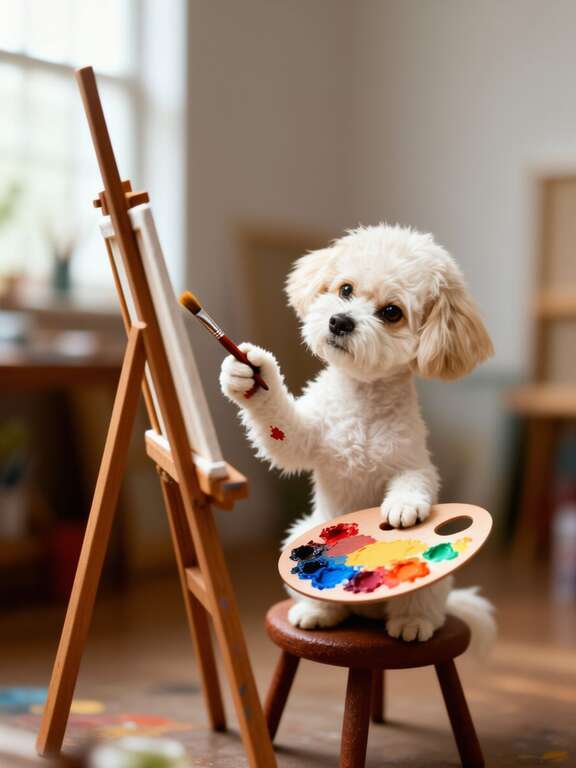
2020 – PresentFor 5,000 years, getting a pet portrait required either artistic skill or money to hire someone who had it. The AI revolution of the 2020s changed both requirements simultaneously. Apps like PawFav put the ability to create beautiful, personalized pet art into the hands of anyone with a smartphone and a pet photo.
This isn't a break from tradition. It's the tradition's natural evolution. Every major technological shift has expanded who gets to participate in pet portraiture: from nobles commissioning Renaissance masters, to Victorian middle class visiting photography studios, to families snapping photos with Kodak cameras, to pet parents creating AI art on their phones. Each step widened the circle.
What AI adds to the tradition is something genuinely new: preview before commitment. For the first time in the history of pet portraiture, you can see exactly what your pet looks like in a style before investing in it. You can try Renaissance, watercolor, pop art, and minimalist in seconds, comparing each against your room's decor, your pet's coloring, and your personal taste. Then you print only what you love.
The result is that more pets are being celebrated as art than at any point in human history. The tradition isn't dying. It's thriving in its most accessible form ever.
Which Modern Pet Portrait Styles Have the Longest History?
Answer: Three styles have the longest documented history. Renaissance regal portraits descend directly from 15th-17th century court painting (500+ years). Oil painting traces to Dutch Golden Age and English sporting art (300-400 years). Watercolor derives from 18th-19th century intimate portraiture (250+ years). Pop art is the youngest established style — only 60 years old — but already considered a classic genre.
Every portrait style available today has roots in a specific historical period. Understanding this makes your style choice more meaningful:
| Style | Historical Origin | Years of Tradition |
|---|---|---|
| Renaissance & Regal | 15th–17th century court portraiture | 500+ years |
| Oil Painting | Dutch Golden Age, English sporting art (1600s-1700s) | 300–400 years |
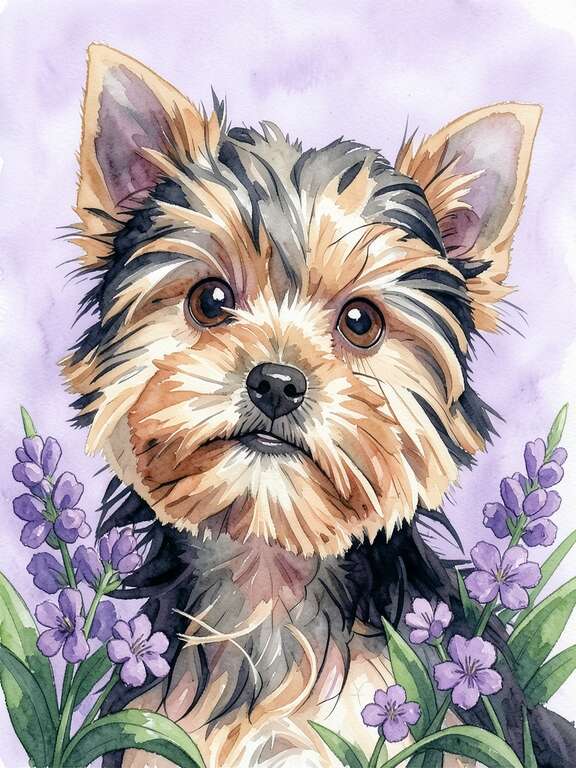
| Watercolor | 18th–19th century intimate portraiture | 250+ years |
| Pencil Sketch | Renaissance preparatory drawings, 1500s onward | 500+ years |
| Pop Art | 1960s Warhol, Lichtenstein | ~60 years |
| Minimalist Line Art | 20th century modernism, Japanese ink drawing | ~100 years |
| Sepia & Vintage Photo | Victorian-era studio photography | ~180 years |
"When I learned that Titian painted dogs for Renaissance nobles, my goofy golden retriever in a velvet cape went from funny to historically accurate. He's not cosplaying royalty. He's following in a 500-year tradition."
Frequently Asked Questions About Pet Portrait History
What is the oldest known pet portrait?
The oldest known pet portraits come from ancient Egyptian tombs dating to roughly 3000 BCE, where specific cats appeared with individual markings rather than generic representations. The famous Pompeii mosaic "Cave Canem" (Beware of Dog), dating to around 79 CE, depicts a specific guard dog with detailed individual features. Both predate Renaissance court portraiture by thousands of years.
Who painted the most famous pet portraits in history?
Several historical artists are famous for pet portraits: Titian (1488-1576) frequently included dogs in royal portraits. Diego Velazquez (1599-1660) painted some of the most celebrated dogs in art history alongside Spanish royalty. Thomas Gainsborough (1727-1788) was a master of English sporting dog portraiture. Sir Edwin Landseer (1802-1873) was Queen Victoria's favored animal painter and is sometimes called the founding father of modern pet portraiture. Andy Warhol (1928-1987) brought cats into pop art with his prints of his cats Sam and Hester.
Did Victorians really mourn their pets with portraits?
Yes — the Victorian era invented modern pet memorial culture. Elaborate mourning rituals for deceased pets became common, including commissioned memorial portraits, locket miniatures containing the pet's hair or photograph, and even formal pet cemeteries. Sir Edwin Landseer's painting "The Old Shepherd's Chief Mourner" (1837) depicts a dog grieving at his owner's coffin and remains one of the most influential pet paintings ever created.
Why are dogs more common than cats in historical pet portraits?
Dogs appeared more frequently in Western pet portraits — particularly during the Renaissance — because they were associated with hunting, loyalty, and aristocratic pursuits. Hunting hounds and lapdogs symbolized social status in ways that cats did not. Cats were more dominant in ancient Egyptian and East Asian art (especially Japanese ukiyo-e). Both species became equally celebrated in Victorian and modern pet portraiture, when sentimental relationships overtook utility-based depictions.
How much did Renaissance pet portraits cost in their era?
Renaissance pet portraits were essentially priceless by modern standards — they required commissioning a master painter (Titian, Gainsborough, etc.) for what would today equate to tens or hundreds of thousands of dollars. Pet portraits were rarely separate commissions; they appeared within larger portraits of nobility. Only royals and the highest aristocrats could afford them. This is why the Victorian middle-class adoption of pet portraiture (and especially photography) was so revolutionary.
How did Etsy change pet portrait history?
Etsy launched in 2005 and quickly became the world's largest marketplace for custom pet art. It connected independent pet portrait artists directly with pet parents at affordable prices ($50-$300 typical range) and removed the gallery middleman that had previously dominated commissioned art. By the 2010s, Etsy hosted thousands of dedicated pet portrait artists. Etsy's infrastructure also became the foundation that the AI era of the 2020s now operates alongside.
Are AI pet portraits "real" art?
This is a debated question, but historically every new pet portrait technology faced the same skepticism. Early photography was dismissed as "not art" by traditional painters. Pop art was initially considered shallow. Etsy commissions were sometimes called "craft" rather than "art." AI portraits continue this pattern. What remains constant is the cultural function: a personal, meaningful image of a beloved animal, displayed with pride. By that 5,000-year-old definition, AI pet portraits are absolutely part of the tradition.
What's the most expensive pet portrait ever sold?
Several historical paintings featuring pets prominently have sold for tens of millions at auction. Sir Edwin Landseer's animal works regularly fetch $1-5 million. George Stubbs' "Whistlejacket" (a horse portrait, 1762) is valued in the tens of millions and hangs in the National Gallery. Dedicated single-pet portraits by Renaissance masters are extraordinarily rare and often considered priceless museum holdings rather than market commodities.
Did famous historical figures commission pet portraits?
Yes, throughout history. Queen Victoria commissioned dozens. Marie Antoinette had multiple portraits including her dogs. Frederick the Great of Prussia kept many Italian Greyhounds and commissioned portraits of them. Catherine the Great of Russia adored her Italian Greyhounds and immortalized them in art. In the modern era, Andy Warhol, Frida Kahlo (with her monkeys and dogs), Pablo Picasso, and many other major artists created art of their own pets.
Your Place in the Story
Here's the thing about history: you're in it. Right now. The pet portrait you create this afternoon becomes part of a tradition that started in ancient Egypt and runs through Renaissance palaces, Victorian parlors, Warhol's studio, and into the app on your phone.
The pharaohs preserved their cats for the afterlife. The nobles commissioned masters to immortalize their hounds. The Victorians mourned their pets with portrait miniatures. Warhol made his cats famous through silkscreen. You create AI art on your lunch break and pick up the canvas after work.
Different tools. Different eras. Same love. Same impulse. Same desire to look at the animal who shares your life and say: you matter enough to be remembered this way.
That's worth hanging on a wall. People have thought so for 5,000 years.
Continue the Tradition
5,000 years of pet love, one app, your pet. Create a portrait that joins the oldest artistic tradition in human history.
Try PawFav Free