The short answer: Match style to aesthetic. Modern minimalist → line art + thin black frames. Farmhouse → warm watercolor + natural wood. Boho → vibrant pop art + mixed frames. Mid-century → graphic illustration + walnut. Traditional → Renaissance + gold. Scandinavian → minimalist line art + white/birch. Coastal → blue watercolor + driftwood. Industrial → high-contrast monochrome + black metal. Maximalist → bold layered + ornate frames. Japandi → sumi-e ink wash + natural ash.
Picking a pet portrait that genuinely fits your home is more about style alignment than personal taste alone. A delicate watercolor looks lost in an industrial loft. A bold pop art piece fights with a Scandinavian living room. The right pet portrait should feel like it belongs in your room rather than something added to it. This guide matches 10 home decor aesthetics to the portrait styles, palettes, and frames that make them sing — so you can choose with confidence.
- Style matters more than personal taste alone — match it to your room
- Frame material and color carry as much weight as the portrait
- Each aesthetic has 1-2 ideal portrait styles, not many
- Preview against your actual wall before printing
You scrolled through pet portrait styles and loved a dozen of them. Then you remember your living room — the linen sofa, the natural wood coffee table, the soft cream walls — and suddenly nothing quite fits. Or worse, you order the one you "loved on screen" and it lands on your wall feeling like a guest who showed up to the wrong party.
The fix isn't picking a different favorite. It's picking the favorite that belongs in your specific room. Every home aesthetic has one or two portrait styles that genuinely sing in that environment, and a handful that fight it.
Here are ten common home aesthetics and the pet portraits made for them.
Best portrait: Minimalist line art in monochrome (black on white) or a single muted accent color. Thin black metal or simple white frames. 11x14 to 16x20 as a single piece — no gallery walls.
Modern minimalist rooms live and die by restraint. Clean lines, neutral palettes, intentional negative space. The portrait that fits is one that participates in the discipline rather than disrupting it. Think a single delicate line drawing of your dog's profile, framed thin and floating quietly on a white wall above a low-profile sofa.
Avoid: Renaissance, oil painting, vibrant pop art — anything visually loud will fight the room's careful quiet.
Best portrait: Soft watercolor with warm earthy tones — terracotta, sage, dusty rose, cream. Natural wood frames in oak, pine, or reclaimed barnwood. 16x20 to 24x30 above the sofa or in the dining room.
Modern farmhouse blends rustic warmth with curated charm. Shiplap, linen, distressed wood, and gentle florals. The portrait style that fits this aesthetic is watercolor — soft, painterly, slightly imperfect in a way that mirrors handmade craftsmanship. Botanical and floral elements in the portrait amplify the farmhouse feel.
Avoid: Sleek modern frames and high-contrast styles. They look like they were dropped into a different home by accident.
Best portrait: Vibrant pop art, watercolor with rich saturated palettes, or constellation/zodiac-themed portraits. Mixed frame styles — brass, rattan, wood, black metal — coexist deliberately. Layered gallery wall placement.
Boho rules are: there are no rules. Layered textiles, plants, vintage finds, mixed metals, and global influences. Pet portraits in boho homes can be expressive, eclectic, even a little chaotic — and they'll fit right in. Pop art with rich colors, watercolor with surprising palettes, or zodiac/constellation themes all work. The boho move: build a small gallery wall mixing portrait styles deliberately.
Avoid: Strict black-and-white minimalism, which can feel cold against boho's warmth.
Best portrait: Graphic illustration with retro palette (mustard yellow, teal, burnt orange, walnut brown). Frame in walnut wood or thin brass. 16x20 to 20x24 above mid-century furniture like an Eames lounge or sleek-leg sofa.
Mid-century modern lives in clean geometry, organic curves, and that unmistakable retro palette. The portrait style that fits is graphic illustration — stylized, bold, intentional. Pop art with mid-century color choices also works for the playful end of the aesthetic. The visual energy should feel deliberately designed, never accidental.
Avoid: Rustic farmhouse watercolors, ornate gold frames — they break the era's clean geometry.
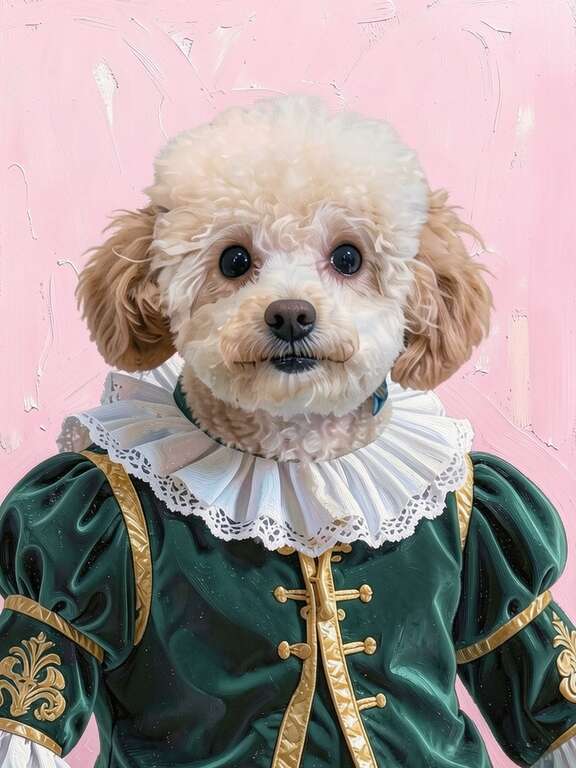
Best portrait: Renaissance or oil painting with rich jewel tones (deep red, navy, gold, forest green). Ornate gold frames or substantial dark wood. 24x30 or larger above a fireplace or as the dining room centerpiece.
Traditional homes lean into formality, history, and craftsmanship. Wingback chairs, oriental rugs, mahogany, and ornate detail. The pet portrait styles made for this aesthetic are Renaissance and oil painting — your dog or cat rendered as nobility, framed in gilded gold, hung with intention. The drama is appropriate; the room expects it.
Avoid: Minimalist line art and modern thin frames — they look like an anachronism in a traditional space.
Best portrait: Watercolor with cool blues, sandy beiges, and soft whites. Frame in white driftwood, weathered wood, or rope-wrapped frames. 16x20 to 20x24 above a slipcovered sofa.
Coastal aesthetics evoke the breeziness of beach houses — slipcovered furniture, jute rugs, soft blues, and natural textures. The portrait style is watercolor in cool ocean palettes: powder blue, ocean teal, sandy cream. Lighter and airier than oil painting, gentler than pop art. The result feels like the room exhales.
Avoid: Heavy gold frames, rich saturated palettes — they fight the breezy feel.
Best portrait: High-contrast monochrome, charcoal sketch, or moody oil painting. Frame in raw black metal, steel, or matte black wood. 24x30 to 30x40 to hold its own against exposed brick and concrete.
Industrial spaces draw on warehouse and factory roots — exposed brick, concrete floors, steel beams, Edison bulbs. The portrait that fits this aesthetic carries weight: high-contrast monochrome, dramatic charcoal sketch, or moody oil. Sizing must be substantial because the architecture itself is large-scale. Frame in raw materials that echo the room's bones.
Avoid: Soft watercolors and ornate gold — they feel out of place against industrial materials.
Best portrait: Bold, layered, ornate. Renaissance with dramatic flourishes, vibrant pop art, or rich oil painting. Ornate gold or carved wood frames. Group multiple portraits salon-style with deliberate density.
Maximalism is about fearless layering — pattern, color, art, objects, all in conversation. The pet portrait isn't fighting the room; it's joining the chorus. Renaissance with theatrical flourishes, vibrant pop art with high color, or rich oil painting all work. The maximalist move: cluster multiple portraits in a salon-style gallery wall with intentional density.
Avoid: Anything restrained or minimalist — it'll get swallowed by the room's confidence.
Best portrait: Sumi-e ink wash style, minimalist line art with subtle warm tones, or pencil sketch in a muted palette (cream, soft black, warm beige, pale sage). Frame in natural ash, oak, or unfinished wood. One thoughtful 16x20 piece beats three smaller ones.
Japandi blends Japanese minimalism's discipline with Scandinavian warmth. Low furniture, natural materials, restrained palettes, and intentional empty space. The portrait that fits is sumi-e ink wash — that traditional Japanese style of expressive, minimal brushwork — or a soft minimalist line art in muted tones. The principle: nothing extra, everything purposeful.
Avoid: Bold pop art, ornate frames, gallery wall density — they break the room's quiet intentionality.
All 10 Aesthetics: Quick Comparison Table
Answer: Use this table to find your aesthetic, then jump to the matched portrait style, palette, and frame in one glance. Keep in mind that frame material and size matter as much as the portrait style itself — a perfect portrait in the wrong frame still clashes.
| Aesthetic | Style | Palette | Frame |
|---|---|---|---|
| Modern Minimalist | Line art | Monochrome | Thin black/white |
| Farmhouse | Watercolor | Terracotta, sage | Natural wood |
| Boho | Pop art, vibrant watercolor | Rich, saturated | Mixed brass/rattan |
| Mid-Century | Graphic illustration | Mustard, teal, orange | Walnut, brass |
| Traditional | Renaissance, oil | Jewel tones | Ornate gold |
| Scandinavian | Line art, pencil | White, gray, beige | Birch, ash, white |
| Coastal | Watercolor | Ocean blue, sand | Driftwood, weathered |
| Industrial | Charcoal, moody oil | High-contrast | Black metal, steel |
| Maximalist | Renaissance, pop art | Bold layered | Ornate gold/carved |
| Japandi | Sumi-e, line art | Cream, soft black | Natural ash, oak |
How Do I Match a Pet Portrait to My Specific Home? (5-Step Process)
Answer: Five steps. (1) Identify your home's dominant aesthetic. (2) Pick the matched portrait style. (3) Pick the matched palette. (4) Pick the matched frame material and color. (5) Preview against your actual wall in real lighting before printing. Style, palette, and frame are equally important — getting two right but one wrong still produces a mismatch.
Most real homes are. Identify the strongest aesthetic in the specific room where the portrait will hang — not the whole house. A modern kitchen and a farmhouse living room are different rooms with different rules. Pick based on the room. If the room itself is a blend, default to whichever portrait style works in the most aesthetics: watercolor in soft warm tones is the most universal choice and looks at home almost anywhere except stark industrial or rigid minimalist spaces.
"I have a modern living room and a farmhouse-style bedroom. I made the same dog two portraits — a minimalist line art for the living room and a soft watercolor for the bedroom. Same dog, two completely different vibes, both totally at home in their rooms."
Frequently Asked Questions About Pet Portrait Decor Matching
What pet portrait style works best for a modern minimalist home?
Minimalist line art in monochrome (black on white) or a single muted accent color. Pair with thin black metal or simple white frames. Sizes 11x14 to 16x20 work best as a single piece — no gallery walls. Avoid Renaissance, oil painting, or pop art, which compete with the room's clean simplicity.
What pet portrait style fits a farmhouse home?
Soft watercolor with warm earthy tones — terracotta, sage, dusty rose, cream. Pair with natural wood frames in oak, pine, or reclaimed barnwood. Sizing 16x20 to 24x30 above the sofa works beautifully. Floral and botanical accents in the portrait amplify the farmhouse feel.
What pet portrait fits Japandi style?
Japandi blends Japanese minimalism with Scandinavian warmth. The ideal pet portrait is sumi-e ink wash style, minimalist line art with subtle warm tones, or pencil sketch in a muted palette (cream, soft black, warm beige, pale sage). Frame in natural ash, oak, or unfinished wood. Keep sizes intentional — one beautifully placed 16x20 piece is more powerful than three smaller ones.
Can I have a pet portrait in a maximalist home without it getting lost?
Yes — maximalist homes need bold portraits to participate in the room's confidence. Choose Renaissance with dramatic flourishes, vibrant pop art, or rich oil painting. Frame ornately. Better yet, cluster 3-5 portraits in a salon-style gallery wall to add deliberate density. The maximalist mistake isn't too much — it's something too restrained that gets swallowed by everything around it.
What if I rent and can't change my decor — how do I match a portrait?
Match to your existing furniture and accessories rather than the walls (which are often plain white in rentals). Look at your sofa, rug, throw pillows, and curtains — those tell you the aesthetic you're already living in. Pick a portrait that fits those, not the building itself. Renters tend to lean Scandinavian, modern minimalist, or boho by default; check the matched recommendations for those aesthetics.
How important is the frame compared to the portrait style?
Equally important. A perfect portrait in the wrong frame still clashes — a Renaissance dog portrait in a thin black modern frame looks confused, just like a minimalist line drawing in an ornate gold frame. When matching to your home aesthetic, treat style, palette, and frame as a single design decision. Many pet parents underestimate how much the frame carries.
Can I mix portrait styles across rooms with different aesthetics?
Yes — and you should. Each room can have its own portrait style appropriate to that room's aesthetic. The same dog can appear as a minimalist line drawing in a modern living room and as a watercolor in a farmhouse bedroom. PawFav lets you create unlimited styles of the same pet, so you can build a cohesive home portrait collection where each room gets the right version. See our gallery wall guide for arranging multiple styles together.
What's the most universal pet portrait style if I'm not sure of my aesthetic?
Soft watercolor in warm earthy tones (cream, sage, dusty rose, gold) with a natural wood or thin black frame. This combination works in farmhouse, Scandinavian, coastal, traditional (in soft variants), boho, and Japandi homes. It struggles only in stark industrial spaces and very rigid modern minimalist rooms. When in doubt, go watercolor.
How do I preview a portrait against my room's specific aesthetic?
Generate 2-3 portrait variations in PawFav (one in your matched style plus one or two alternates), then hold your phone against the actual wall where the portrait will hang. Stand back, view at eye level, in your room's normal lighting. The version that disappears into the room — that feels like it was always there — is the right one. Our color theory guide has more detail on this in-context preview process.
Find Your Perfect Match
Preview every style and palette against your actual wall. Match your aesthetic with confidence. Free to try.
Try PawFav Free